
Why did I decide to raise this topic?
Well, we humans try to fit our dogs into our environment - we impose on them what they should like and what they should not, what they should eat and what they should not. We have access to various resources. But what are we guided by? With the needs of animals, or perhaps with your own human principles, according to what is "appropriate" and what is not, what is well perceived and what is no longer appropriate?
More than once during a walk, I observed irritated owners whose dogs stopped a little longer at a bush, at a tree or just sniffed on the lawn. Several times I saw owners pulling their dogs (who were just doing this exploration of the area) on a leash. A few days ago, on one of the American forums, I came across a question from a frustrated Labrador owner "how to stop my dog from sniffing??!!"
So let's expand the topic a bit. What are the natural needs of dogs?
– sniffing
- biting (chewing)
– digging
– social contact (other people, animals)
In other words, needs that are mostly in conflict with our human "principles". Because many owners report problems - my dog kicks, bites shoes and his sniffing drives me crazy (something about this can be said especially by basset owners)
Well, by not meeting the dog's natural needs, we are asking for trouble. Because the dog will strive to satisfy these needs himself and it may turn out that in a way that will not suit us at all.
It is especially important to meet these needs with problem dogs, because firstly, it tires the dog, secondly, it builds its self-confidence, and thirdly, it reduces stress, as a result, helping in problems.
It is necessary to enrich the dog's life with olfactory work, satisfy its natural needs while forcing its brain to work.
Sniffing activates the sense of smell, which deactivates other senses, it greatly reduces stress and tires the dog more than an active walk.
And now I will present how puppies' environment should be enriched, from the moment they open their ears, eyes and take their first steps.
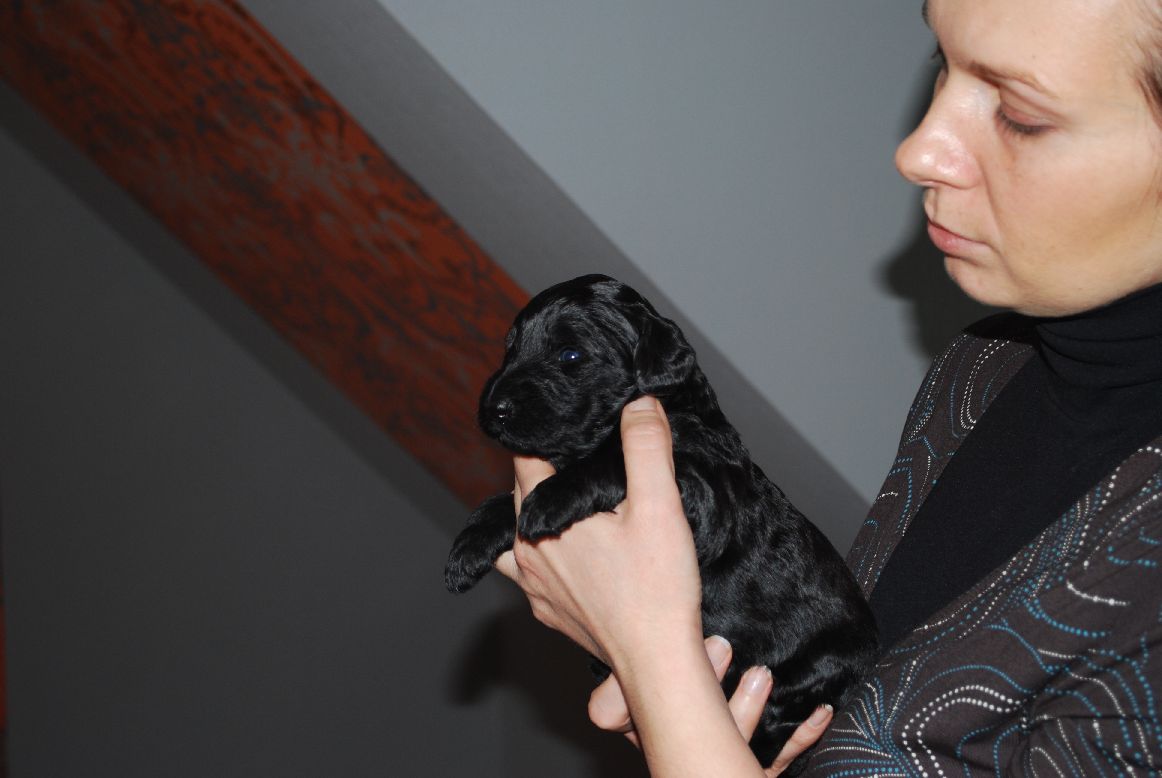
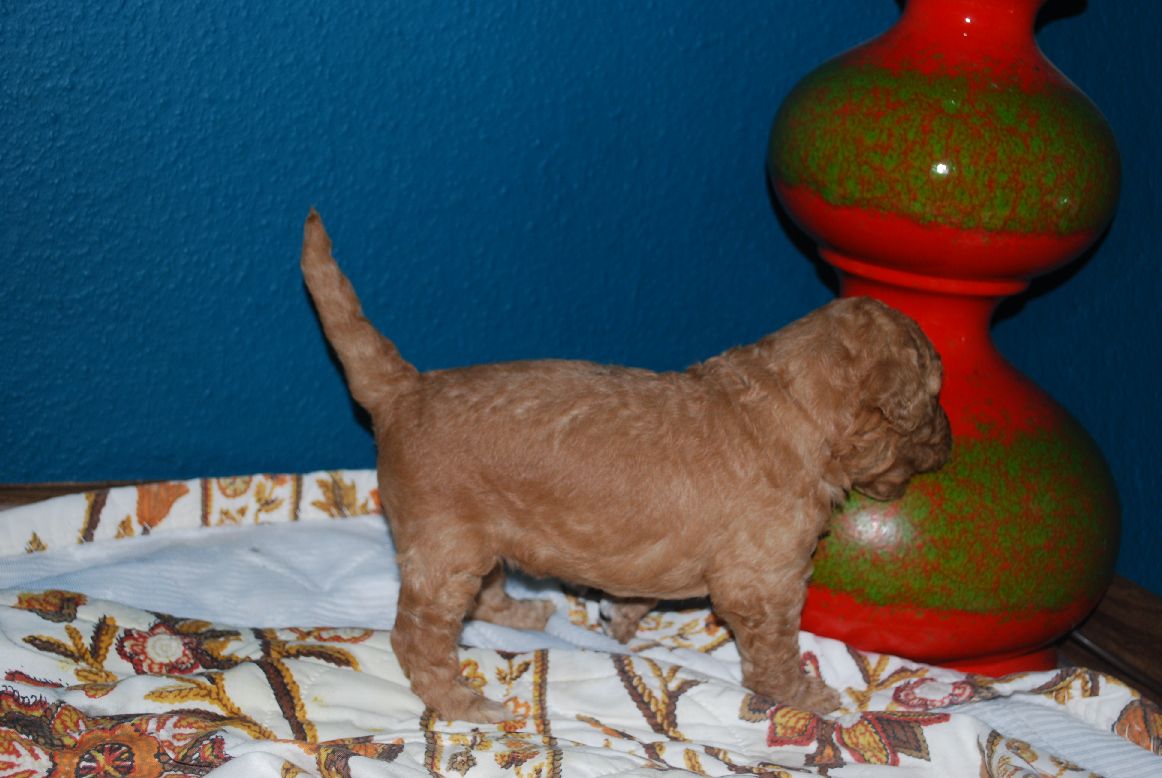
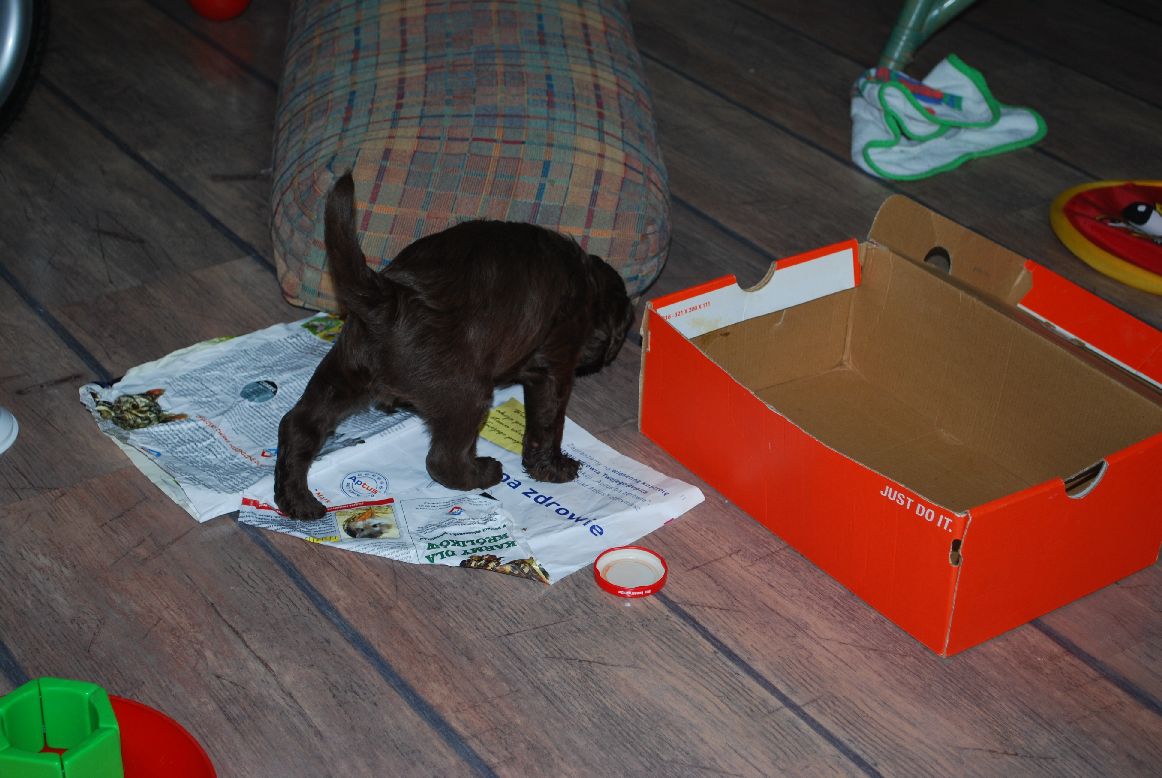
The enriched environment allows dogs to fulfill their natural needs - it allows dogs to track, sniff, dig, lick, etc. Various objects made of different materials are scattered around the room. These items contain attractive rewards in the form of food. Puppies walk, sniff, find rewards and then eat, chew or lick them (depending on the consistency of the reward). After 15 minutes on the playground, puppies are dead for a couple of hours. (to see the full size photo, you have to click on it several times)
-

-

-
-
-
-
-
-
-
-
-
-
-
-
hard five!
-
eye contact
-
-
-
lay down - good job!!
-
-
-
-
-
-
-
-
-
-
-
-
-
-
-
Sit







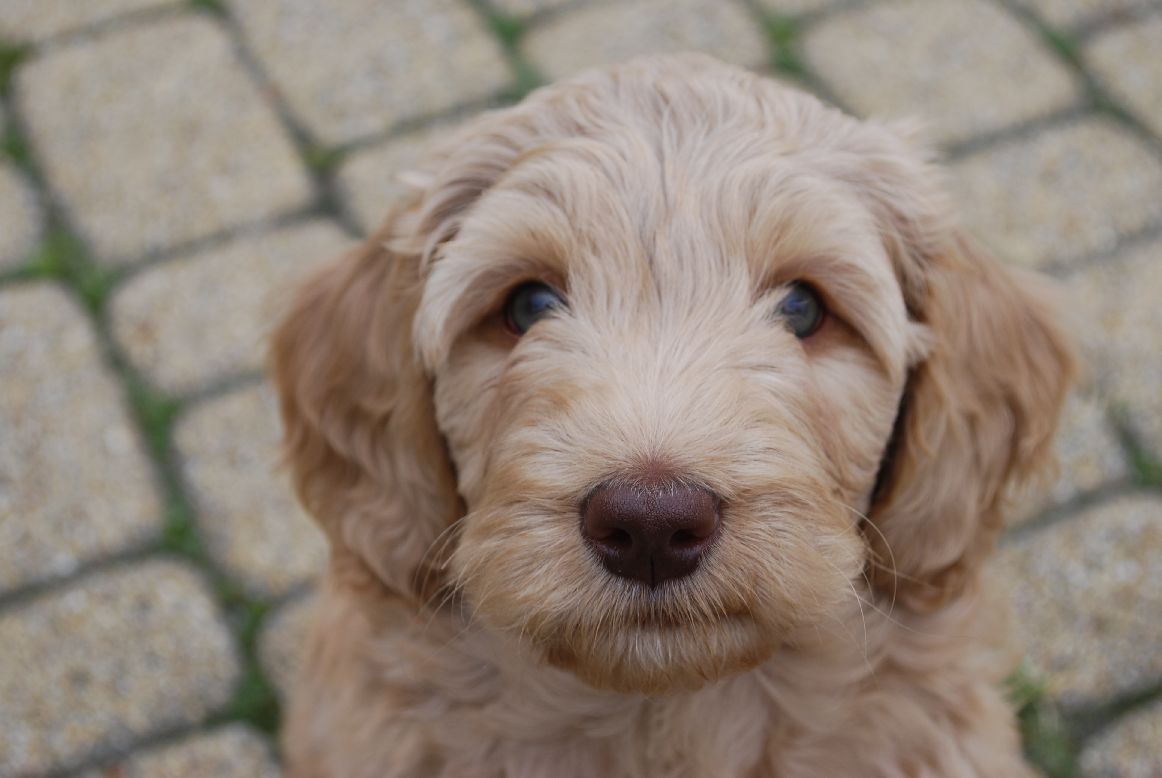


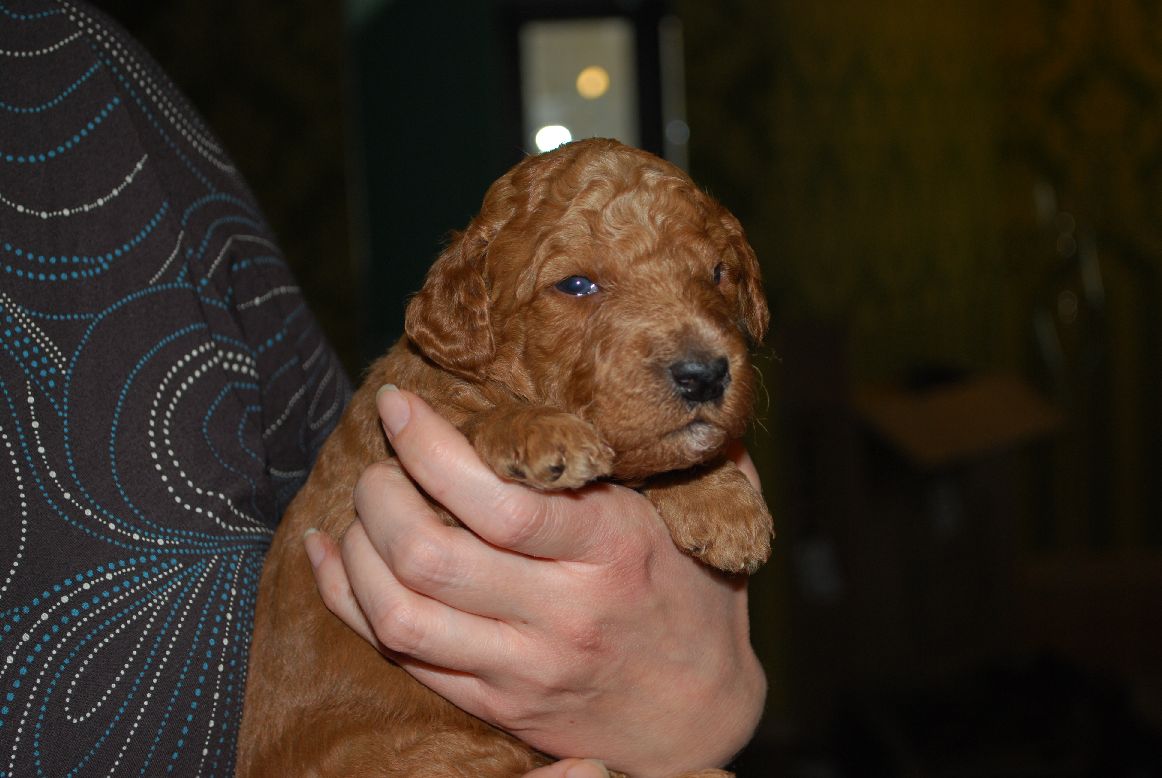


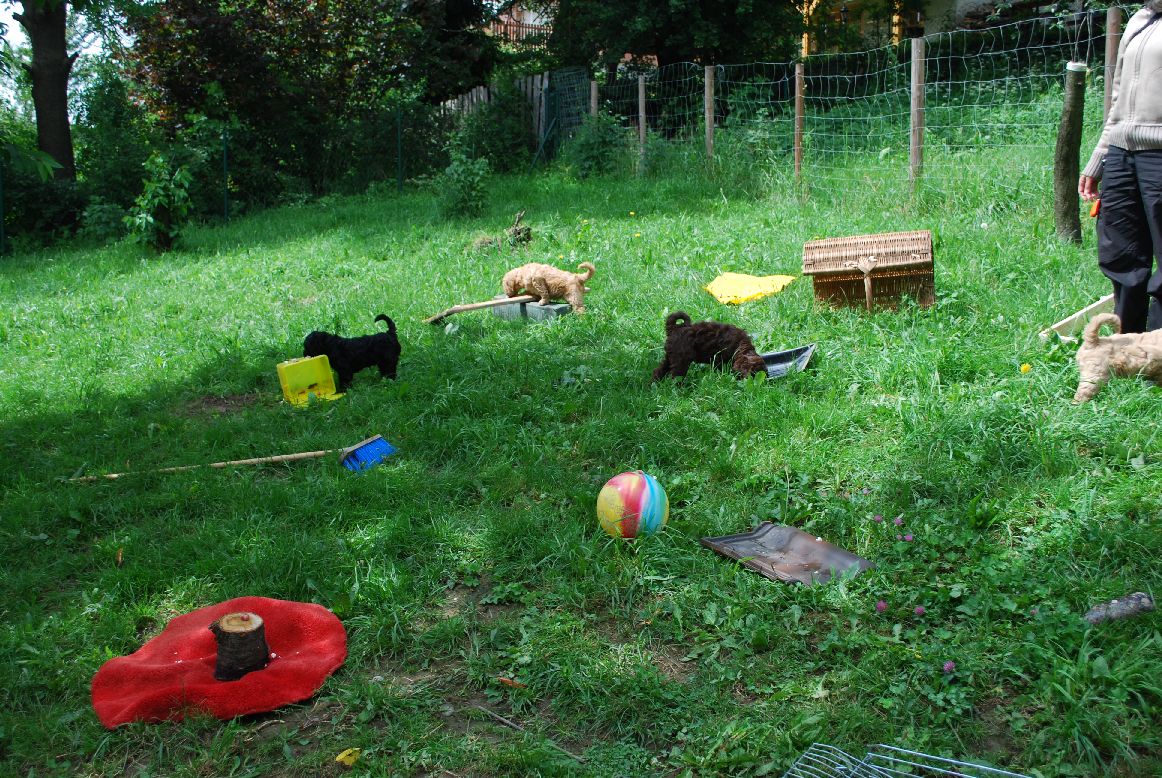

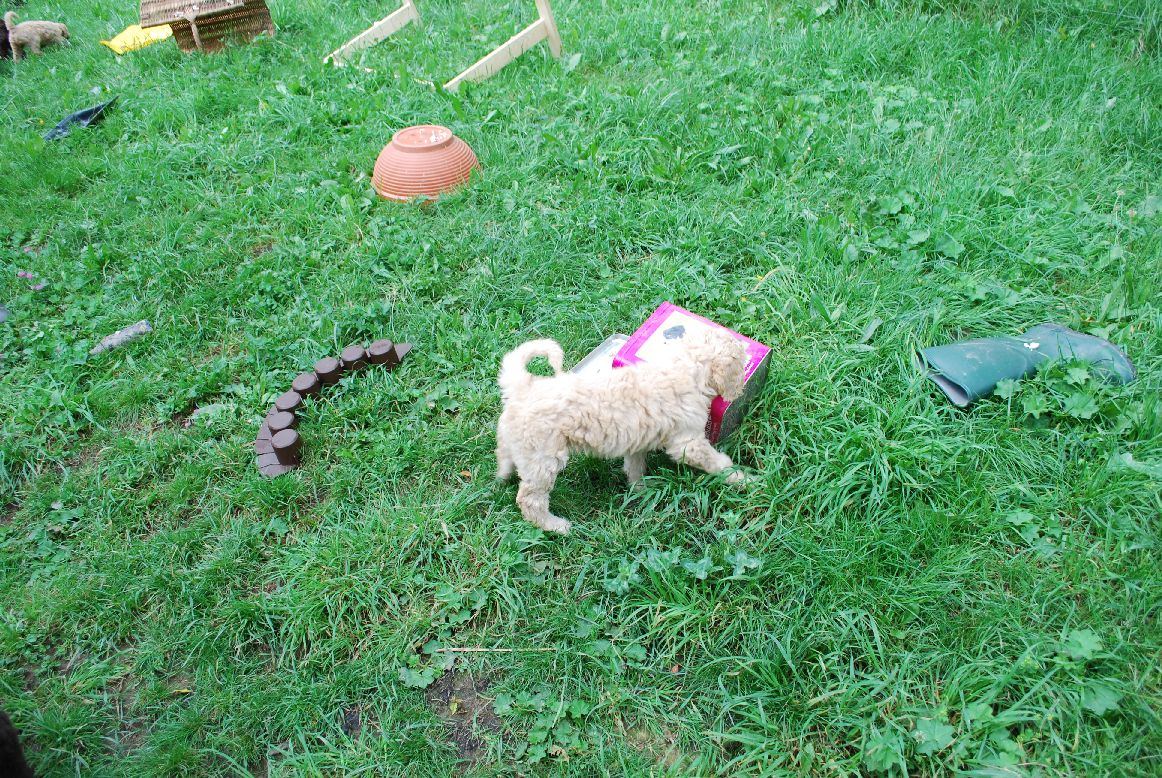
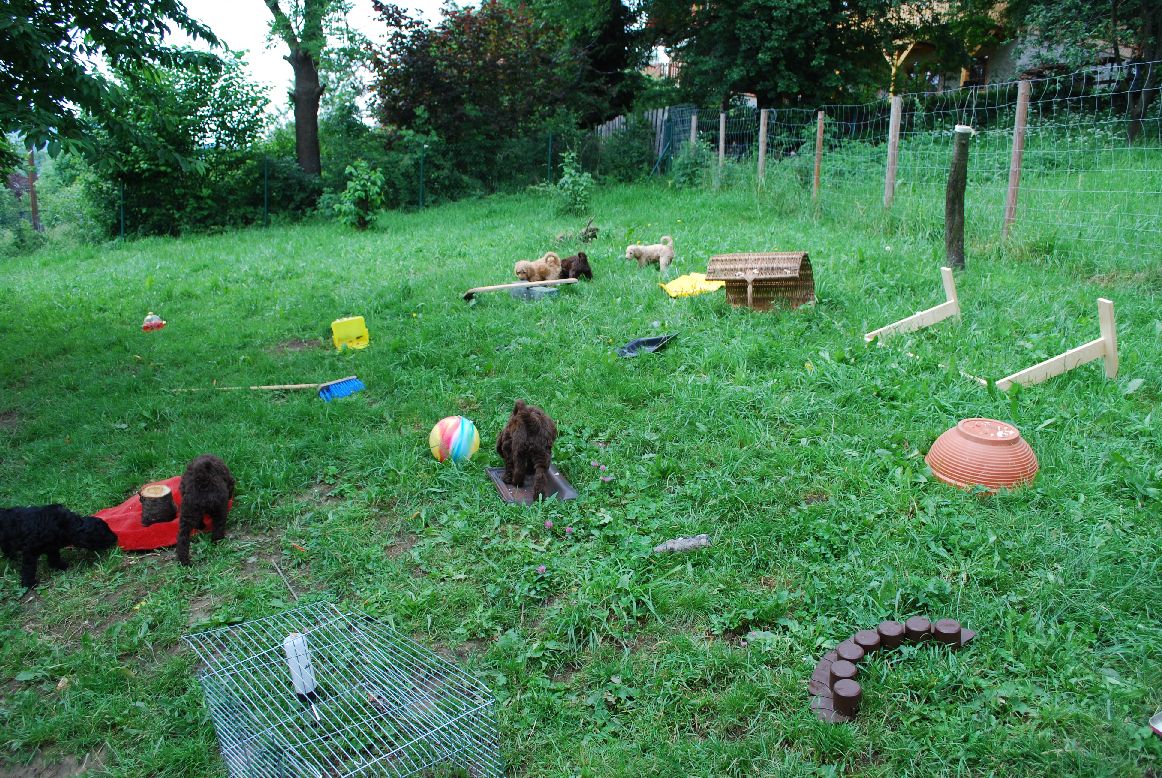

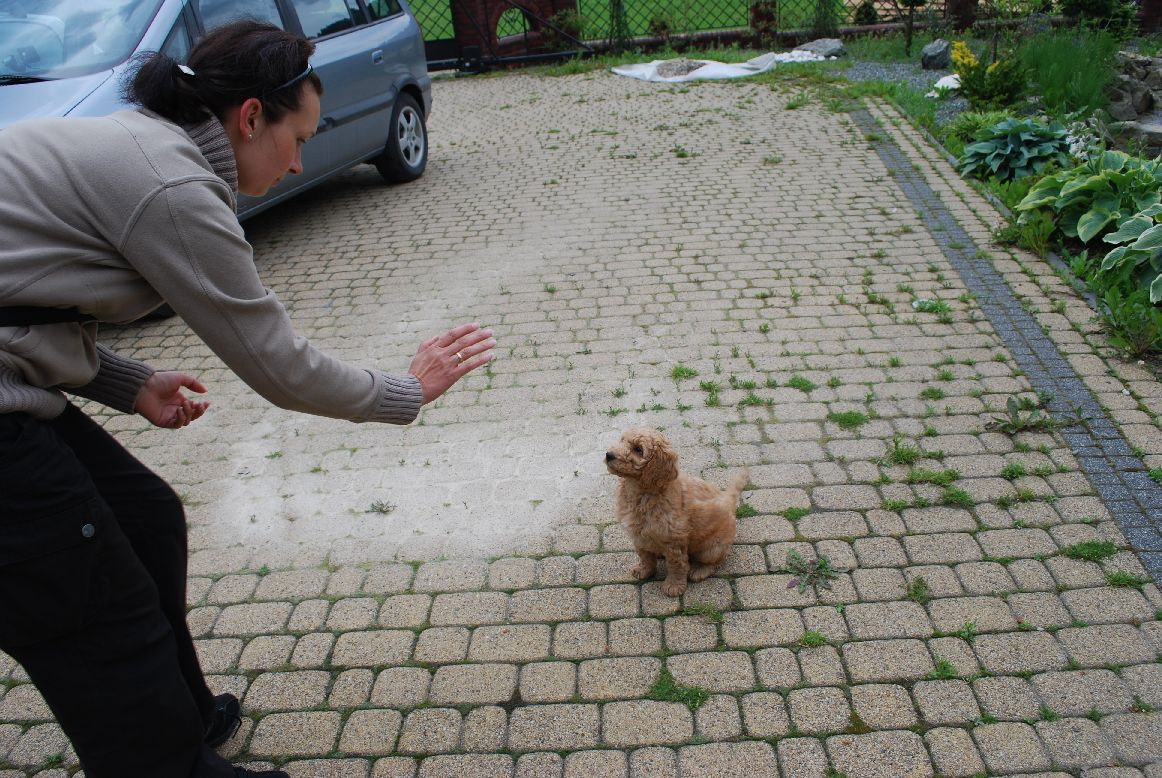
The same with older puppies - except that the playground can be moved to the yard.
When the breeder does this hard but rewarding work for the puppies, it's the owner's turn. I'm not talking about building some complicated playgrounds here - it's enough to let the dog fulfill the above-mentioned needs. Then I guarantee that the effort put in by the breeder* and then the owner will pay off in the adult life of the dog and will allow you to have a happy and mentally balanced pet.
What can we do?
1. Walks on which the rules apply:
– loose, long leash
- suspenders or a wide collar (preferred suspenders)
- no dog jerking
-we don't say anything
- we're not in a hurry
– let the dog sniff!!!
2. We give the dog bones, raw meat, chews (need to chew, tear)
3. Let the dog dig (very underestimated) give the dog one spot in the garden or let the dog dig in the park, forest (not in sandboxes made for children!). In Finland, special sandpits are made for dogs.
What is important and important to us will not necessarily coincide with what is important to our pets. Over the centuries of living together, dogs have learned to adapt to our conditions, and in part we forced this "adaptation". So I am appealing - let's meet the needs of our pets instead of denying them and pretending that they do not exist or that they are identical with ours.
*it is worth taking a deeper look at how your breeder socializes the puppies that come into the world in his kennel. Make sure that the breeder provides you with full photo documentation, drive to the kennel and see for yourself. Don't be fooled - often the soap bubble bursts when we show up at the kennel and see the conditions in which animals live - cages standing on top of each other, dogs crammed in them. Such a breeder is not able to ensure proper mental development of your dog. Pay attention to how many litters your breeder has in a year and you will know if this breeding is not an ordinary production line.
Hairy Passion
Australian Labradoodle Kennel in Poland
First Australian Labradoodle in Poland


